
About Our Window Replacement Team
Careful diagnosis shapes every project we take on across Los Angeles, from a single fogged pane to the full replacement of aging aluminum frames. Our technicians check sash operation, frame condition, failed seals, and moisture staining around sills before recommending a repair or a new installation. Guesswork costs homeowners money. Heading into 2026, that steady approach still guides our crews, and the sections below explain how we work and what we look for.
Request a Written Estimate (213) 340-1917- Our Background -
Our Window Replacement Background
Much of what this company does grew out of repeat service calls on the same handful of failures: fogged insulated glass units, sliders that bind in their tracks, and retrofit frames set without proper flashing. Los Angeles housing stock runs from 1920s bungalows with wood double-hung sash to mid-century stucco homes and newer stucco-over-frame builds, and each one asks a different question about whether a retrofit or a full-frame replacement is the sounder choice. Our focus settled on that decision point. Technicians measure rough openings, check the weep system, probe sills for soft wood, and read U-factor and solar heat gain ratings against a home’s sun exposure before any order is placed. The problem-solving habit was never a slogan here; it came from watching what happens when small symptoms sit unaddressed and water finds its way into framing. Through 2026, we continue working with Los Angeles homeowners who want the underlying cause identified, the scope documented in a written estimate, and a walkthrough once the crew finishes.
Click Me to Call: (213) 340-1917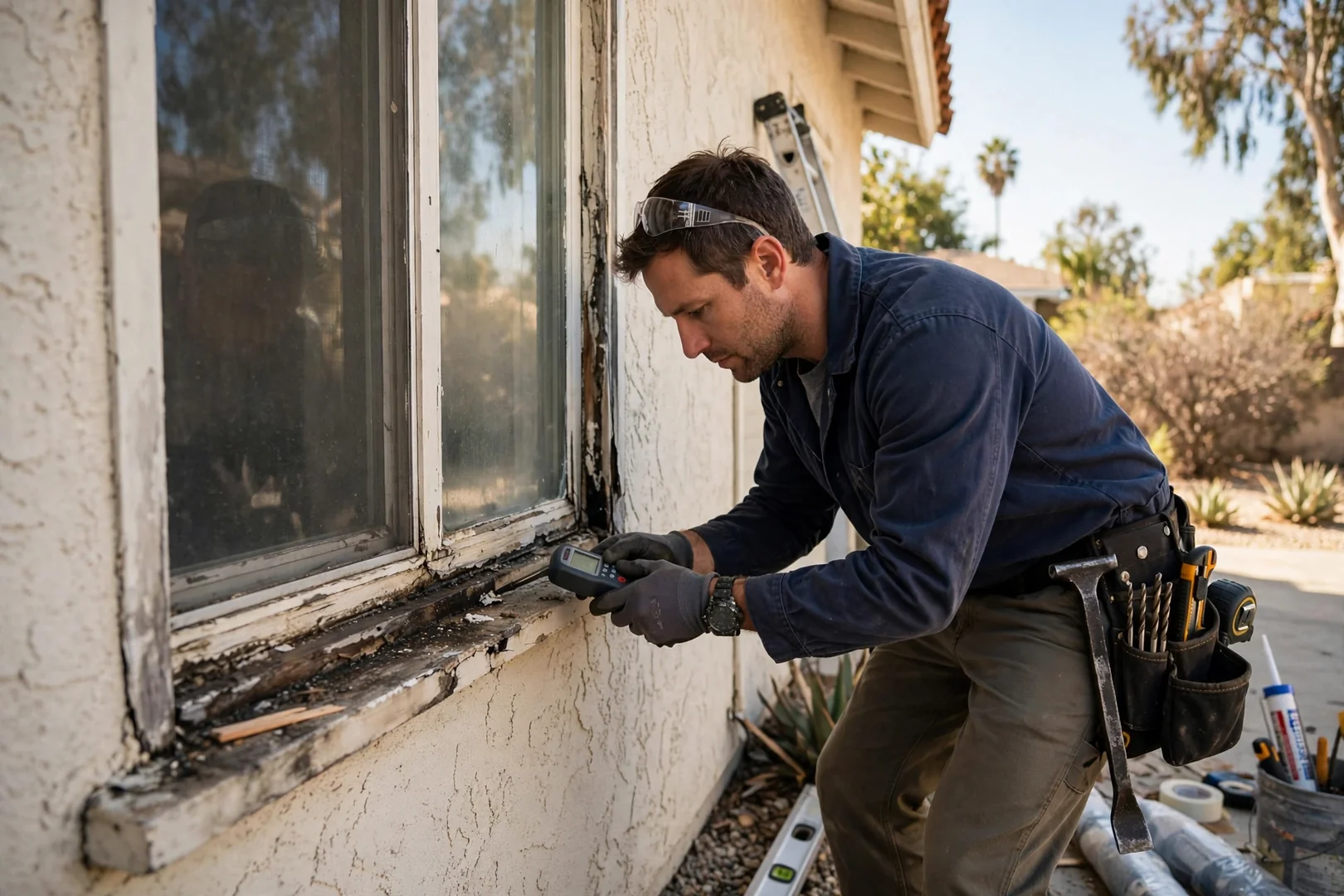
How Experienced Is Our Los Angeles Window Replacement Team?
Experience here shows up in the range of window problems our technicians have diagnosed rather than in a headline number. Crews have serviced wood double-hung sash with broken cord balances, aluminum sliders pitted by salt-laden air on the Westside, vinyl retrofit frames with hardened weatherstripping, and picture windows where a failed insulated glass seal left permanent fogging between panes. Los Angeles adds its own variables: seismic movement, stucco returns, hillside wind exposure, and long stretches of direct afternoon sun that wear down gaskets and low-grade glazing beads. Patterns become obvious over time. That pattern recognition is what shortens diagnosis once we are on site.
Technique keeps changing, and our methods change with it. Laser measuring, dry-fitting units before fastening, backer rod paired with sealant instead of caulk alone, and flashing details that route water back out rather than trapping it behind stucco are all standard practice for us in 2026. Los Angeles openings are rarely perfectly square, so shimming, squaring, and checking reveal lines matter as much as the window being installed. Every job closes with an operational check of locks, sash travel, and screens, followed by a walkthrough with the homeowner against the written scope. Small details prevent large callbacks.
- Professional Standards -
What Standards Guide Our Window Replacement Work?
Every project begins with a documented opening inspection, where our technicians check sill condition, framing squareness, flashing integrity, and existing sealant failure before a single sash is removed. Crews wear cut-resistant gloves and eye protection during glass handling, and suction lifts, glazing tools, and pry bars are inspected at the start of each job so damaged equipment stays off the truck. Written measurements and photos of the rough opening are recorded, then reviewed against the ordered unit before installation begins, which prevents the fit problems that lead to air leaks and water intrusion later. Work performed in 2026 follows current California energy performance expectations for replacement glazing, including proper U-factor and SHGC labeling on new units, along with permit requirements that apply to many Los Angeles homes. Old glass, frames, and packaging leave with us for recycling or proper disposal rather than sitting in a driveway. Nothing is guessed at. Each finished opening receives a level check, an operation test on locks and sashes, and a walkthrough with the homeowner before we close out the paperwork.
Click Me to Call: (213) 340-1917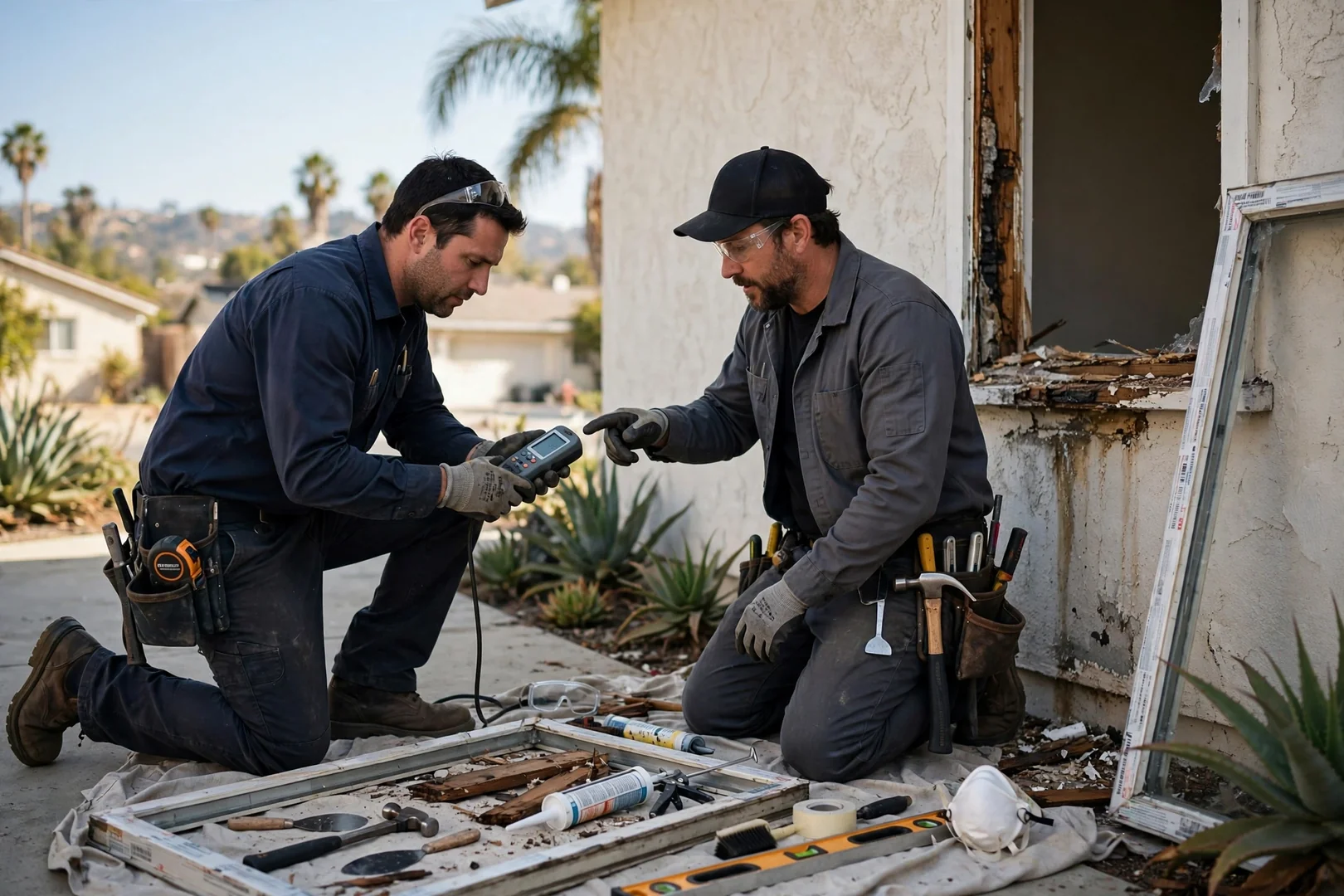
Tools and Local Knowledge
How Are We Equipped for Los Angeles Properties?
Housing across Los Angeles ranges from early stucco bungalows with wood-framed single-pane openings to mid-century homes with wide aluminum sliders and hillside additions where openings sit well above grade. Those differences shape what we bring. Coastal air on the western side of the city accelerates corrosion on older aluminum tracks and hardware, while inland areas to the east and north see stronger solar gain that stresses seals and causes fogging between panes, so our inspection kit includes moisture meters, infrared thermometers, and glazing gauges to confirm whether a seal has actually failed. Dry-season heat and occasional winter storm driven rain both influence how we stage flashing, backer rod, and sealant work, and stucco returns often call for careful cutting and patch preparation rather than a simple pocket install. Technicians are trained on ladder setup, scaffolding placement on sloped lots, and two-person glass handling with suction lifts, and each tool set is checked for wear before crews leave for a Los Angeles job site. Through 2026 we continue reviewing our measuring and moisture-testing routines so diagnoses stay consistent from one property type to the next.
Committed to Los Angeles Homes
What Can Los Angeles Customers Expect From Us?
Homeowners usually call after noticing something specific: a sash that sticks, condensation trapped between panes, a draft near the frame, or paint lifting below a sill. You will receive a written estimate that names the underlying cause we found, not just the part being replaced, along with the measurements and photos taken during the inspection. Pricing is itemized before work starts, so labor, units, and any framing or stucco repair are visible up front. Arrival windows are confirmed in advance, and if a material delay affects the schedule, we tell you the same day we learn of it.
Inside the home, floors and furnishings are covered, old glass is removed and hauled away, and the work area is cleaned before the crew leaves. Each install ends with a walkthrough where we open and lock every sash together, point out how the new seals and weatherstripping should look, and explain simple checks that catch early moisture problems. Photo documentation of the completed openings stays on file. Questions after the visit reach the same team that did the work, and through 2026 we continue following up on prior installations when homeowners want a second look at performance or drainage.
Schedule an Inspection (213) 340-1917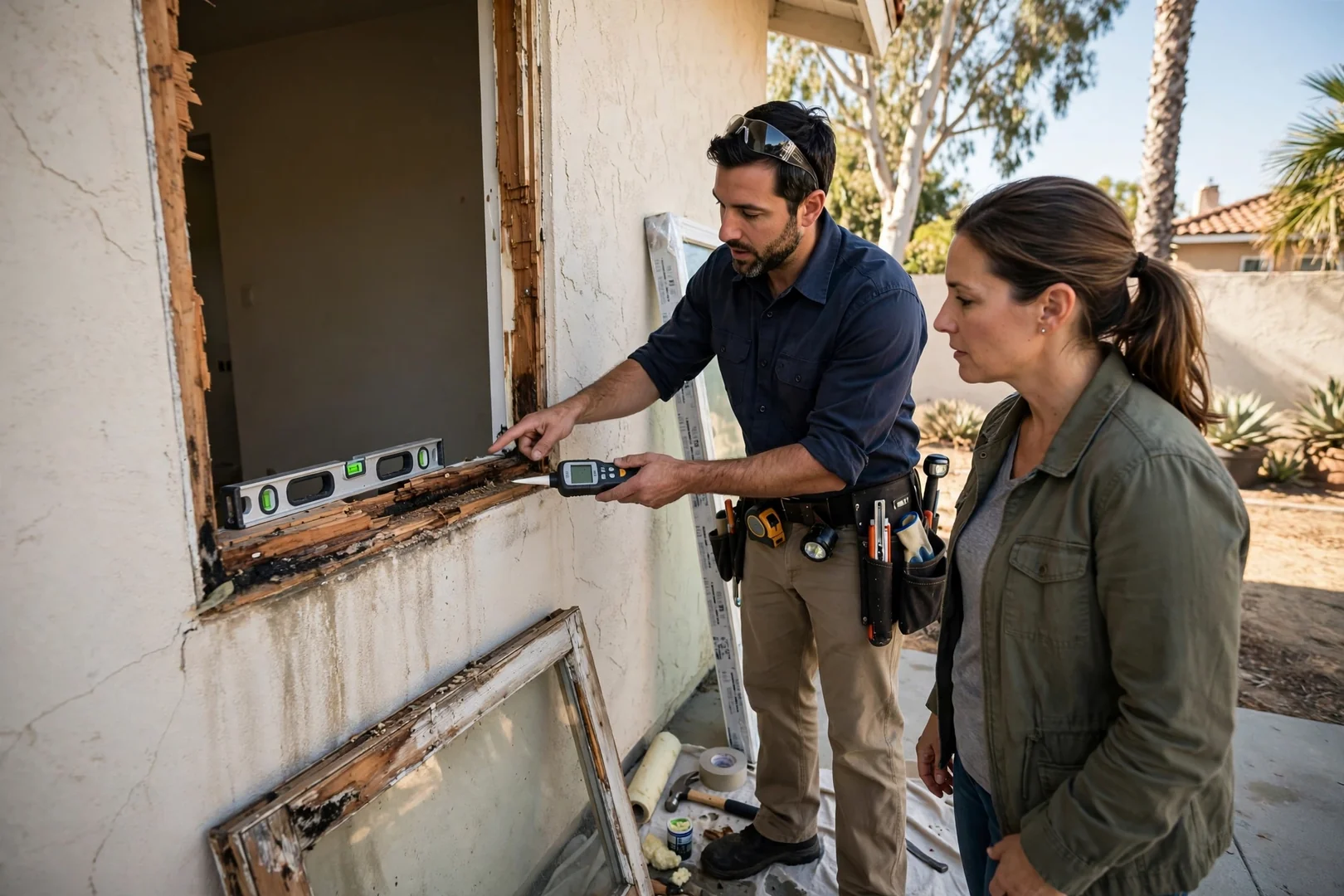
// Neighborhoods We Serve //